cost of living
What It Actually Costs to Live in Twin Falls, Idaho: A Real Estate Agent's Honest Breakdown
What It Actually Costs to Live in Twin Falls, Idaho: A Real Estate Agent's Honest Breakdown
I get this question every week from people considering a move to Magic Valley.
"What does it actually cost to live there?"
Not the median home price statistic. Not the Chamber of Commerce talking points. The real number — what it costs to actually live a good life in Twin Falls, Idaho.
Here is my honest answer as someone who lives here, works here, and helps people make this decision every day.
Fair warning: I am a real estate agent. I have an obvious interest in people moving here. So I am going to try extra hard to be honest rather than promotional.
Housing
At the time of writing, the median home price in Twin Falls County is in the mid-to-upper $300,000s — significantly below Boise (mid $400,000s to $500,000s) and dramatically below West Coast metros.
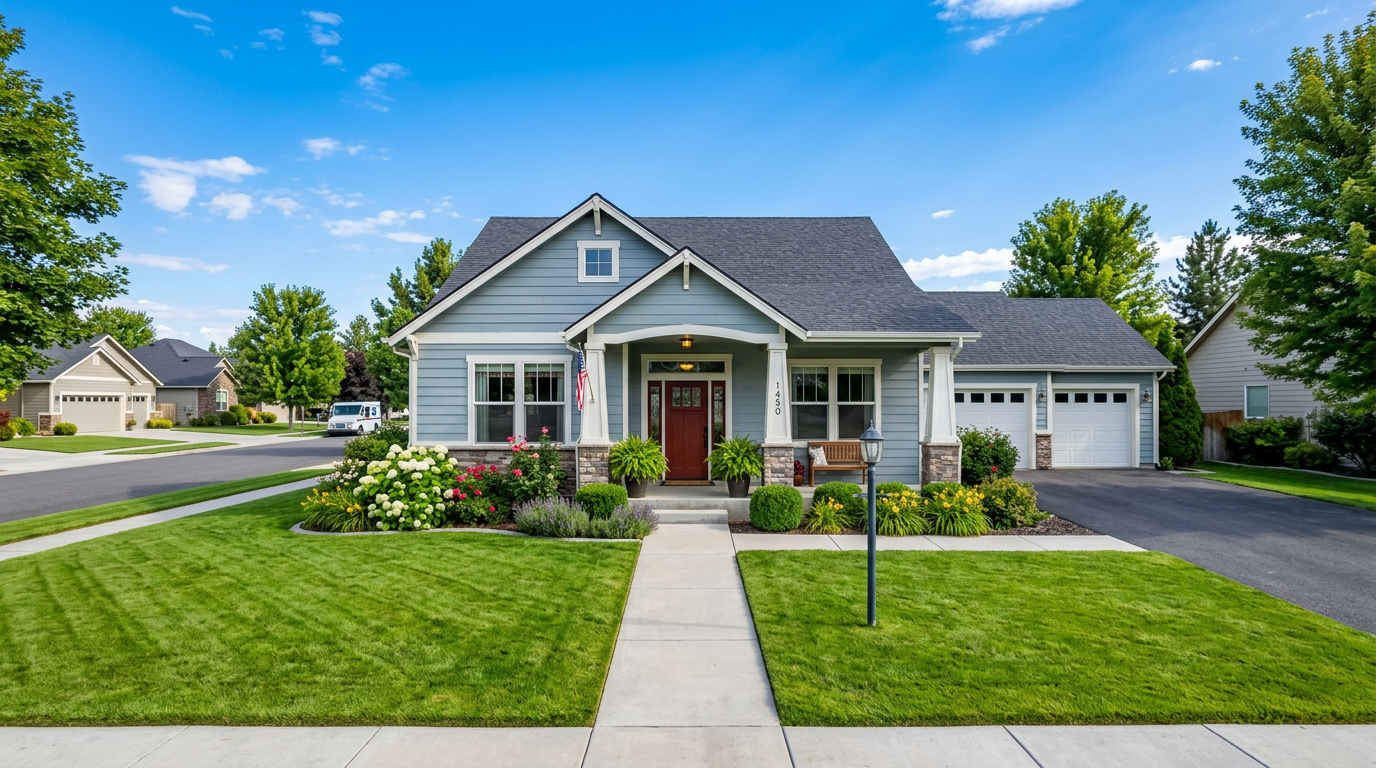
For that price range in Twin Falls, you are typically getting: 3 to 4 bedrooms, a garage, a yard, a newer build or well-maintained older home, and in many cases proximity to the canyon rim or the river.
Rental rates for a 3-bedroom house run roughly $1,400 to $1,900 per month depending on location and condition.
Here's the thing about Twin Falls housing: the market has moved significantly over the past five years but it has not lost its fundamental value proposition relative to other Western markets. You still get meaningfully more for your money here than almost anywhere in the Mountain West.
Utilities
Idaho Power serves most of Magic Valley and rates are among the lowest in the nation. A typical month for a 2,000 square foot home runs $80 to $150 depending on season and efficiency.
Natural gas is available throughout Twin Falls County and is the primary heating source for most homes. Annual heating costs for a well-insulated home average $600 to $1,000.
Water and sewer costs are modest — most households pay $60 to $90 per month combined.
Food and Groceries
Twin Falls has a full range of grocery options including Walmart, Fred Meyer, WinCo, Broulim's, and a growing local food scene. Grocery costs are slightly below the national average.
The restaurant scene has grown significantly in the past decade. You'll find everything from excellent local spots to most major chains. A dinner out for two at a mid-range restaurant typically runs $45 to $70 with drinks.
The Lifestyle Cost — This Is the Important Part
Here is what the cost of living calculators don't capture:
In Twin Falls, most of the best things are free or nearly free. The canyon rim trail is free. The Perrine Bridge overlook is free. Centennial Waterfront Park is free. Shoshone Falls has a small day-use fee. Balanced Rock is free.
The outdoor lifestyle that is the primary quality-of-life argument for Magic Valley costs almost nothing to access. That changes the calculation significantly compared to cities where recreation requires expensive gym memberships, club fees, or long drives to public land.
My Honest Assessment
Twin Falls is not cheap in absolute terms. But relative to the quality of life it offers — the outdoor access, the community, the pace, the canyon — it represents genuine value that is increasingly hard to find in the American West.
If you want to run the real numbers on what a move here would look like for your specific situation, I'm happy to have that conversation. No obligation, no pitch.
Dr. Ron Jones | Rim & River Real Estate | rimandriver.com | 208-712-8386