hagerman fossil beds
Hagerman Fossil Beds: Where Idaho's Ancient Past Meets the Snake River
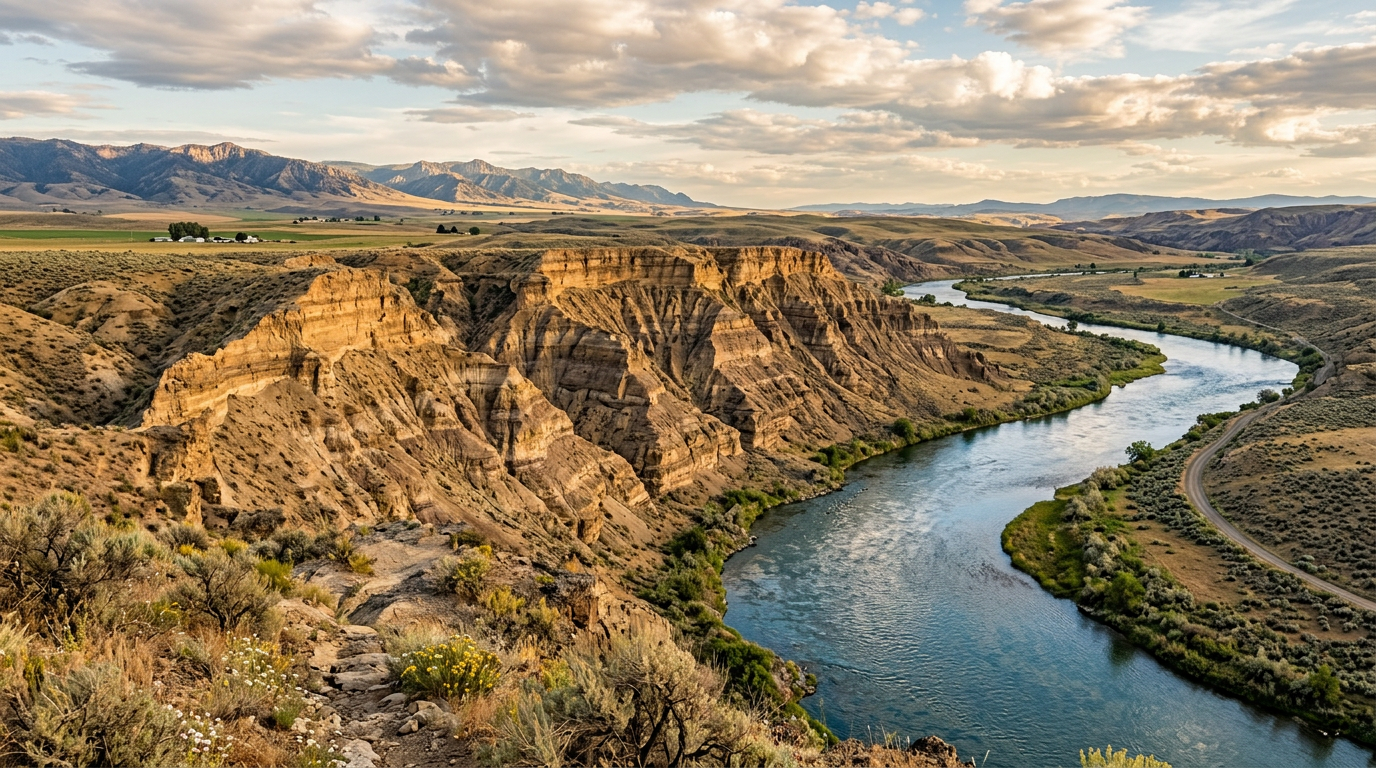
Hagerman Fossil Beds: Where Idaho's Ancient Past Meets the Snake River
Five million years ago, this canyon was a savanna.
Horses grazed here — the Hagerman Horse, Equus simplicidens, the earliest known member of the modern horse genus. Mastodons. Giant ground sloths. Saber-toothed cats. Camels. A landscape that looked nothing like the basalt canyon and high desert you see today.
And then the Snake River cut through it all, and the fossils of that ancient world ended up embedded in the canyon walls — where paleontologists have been excavating them for decades, and where you can stand on a canyon rim overlook and look down at an active fossil site.
Welcome to Hagerman Fossil Beds National Monument. It is one of the most undervisited National Monuments in the American West, and it is in our backyard.
What Is the Hagerman Fossil Beds?
Hagerman Fossil Beds National Monument preserves a stretch of Snake River canyon in Gooding County where Pliocene-era deposits have yielded one of the most significant fossil records of that time period anywhere in the world.
The Monument was established in 1988 and encompasses about 4,300 acres along the Snake River. The visitor center is in downtown Hagerman — a small, excellent museum with fossil displays, a full Hagerman Horse skeleton, and context for what you're about to see.
From the visitor center, a self-guided auto tour takes you to the canyon rim overlooks above the fossil beds. The fossil sites themselves are not open to public excavation — but you can look down into the canyon and see the geological layers where the fossils have been found.
The Hagerman Horse
The Hagerman Horse is Idaho's state fossil. More than 200 individuals have been recovered from this single site — the largest known deposit of this species anywhere in the world.
Here's what I find remarkable: this horse was walking across this landscape at the same time as mastodons and saber-toothed cats, in a world that would have been completely unrecognizable as Southern Idaho. And then a series of catastrophic floods — the Bonneville Flood, the Missoula Floods — reshaped everything. The canyon was cut. The savanna became desert. The animals disappeared.
And their bones ended up in a canyon wall in Gooding County, waiting for a 20th century homesteader to find them.
Visiting the Monument
The visitor center in Hagerman is free and open most days. The auto tour to the fossil bed overlooks adds about 45 minutes. If you want to combine this with a paddle on the Hagerman Valley stretch of the Snake River, you can do both in a single day — park in Hagerman, visit the monument in the morning, kayak in the afternoon.
I have done this exact day trip multiple times and it never gets old.
Gooding County Is Full of Surprises
Hagerman Fossil Beds. Thousand Springs. Hot springs. The Snake River. The Hagerman Valley agricultural landscape.
Gooding County consistently surprises people who thought they knew Magic Valley. If you're looking at real estate in Southern Idaho and you haven't considered Gooding County — spend a day in the Hagerman Valley first. It might change what you're looking for.
Dr. Ron Jones | Rim & River Real Estate | rimandriver.com | 208-712-8386