spring seep
Hidden Spring Seep in the Snake River Canyon: Where Water Comes From Nowhere
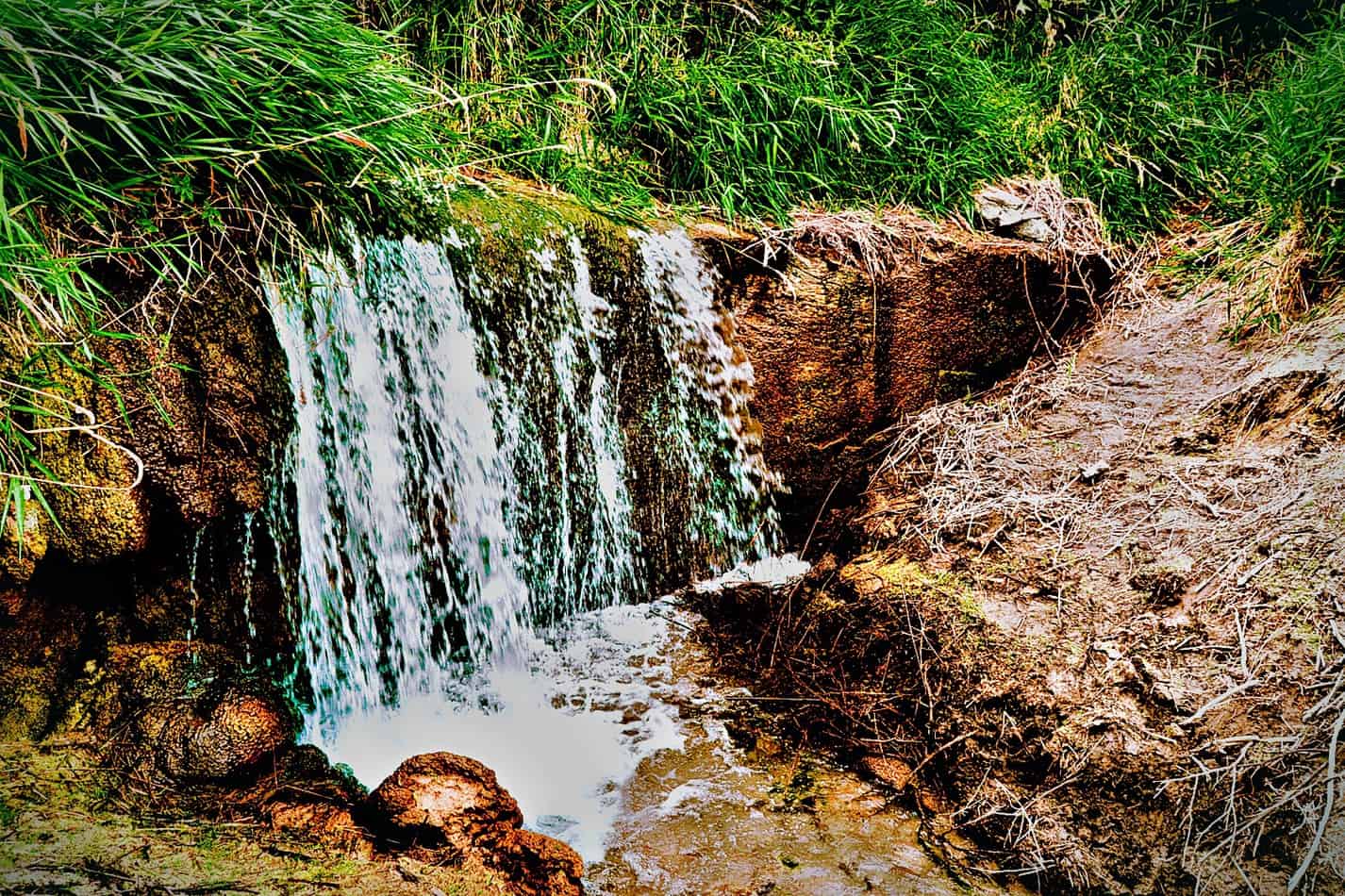
Hidden Spring Seep in the Snake River Canyon: Where Water Comes From Nowhere
I almost paddled right past this.
It was tucked into a narrow side canyon — barely a crack in the main wall — where a spring seep had been running for so long it had carved its own little world. Moss covered every surface. Fern grew from cracks in the rock. A thin stream of water cascaded down a series of rock shelves, pooling and dropping, pooling and dropping, before disappearing into the river.
I took this photo by wedging my kayak into the mouth of the channel and shooting back into the darkness. The light at the top of the frame is where the sky opens up through the crack in the canyon wall.
This is not on any map. There is no trail to it. You can only find it from the water.
The Hidden Hydrology of the Snake River Canyon
The Snake River Canyon is full of water that seems to materialize from nowhere.
Here's what's actually happening: the Snake River Plain is underlain by a massive basalt aquifer — the Eastern Snake Plain Aquifer — one of the largest and most productive aquifer systems in the United States. Water enters the aquifer from rivers, irrigation canals, and rain and snowmelt across a vast area of Southern Idaho and beyond.
That water moves slowly through the fractured volcanic rock and emerges wherever the canyon has cut deep enough to intersect the water table. The result is springs, seeps, and hidden waterfalls that appear from solid rock all along the canyon walls.
Here's the wild part: some of the water emerging in these springs entered the aquifer decades ago, hundreds of miles away. When you put your hand in one of these seeps, you're touching water that has been traveling underground since before you were born.
Exploring the Side Canyons
The main Snake River channel is just the beginning. The canyon has side channels, alcoves, and tributary canyons that open up when you get close to the wall.
Most of them are dry. But a few — especially in the sections between Twin Falls and the Thousand Springs area in Gooding County — hold exactly this kind of discovery: a spring-fed microhabitat that exists in its own silence, cut off from the desert above by a few hundred feet of basalt.
Paddling slowly and staying close to the wall is the only way to find them.
A Real Estate Agent Who Knows the Territory
When I say I know Magic Valley, I mean I know it the way you know a place after years of slow, curious exploration. The canyon has taught me things about this region that you can't learn from a county map or a real estate database.
That's the kind of local knowledge I bring to every client conversation. If you want an agent who knows the territory from the inside out — literally — I'm available.
Dr. Ron Jones | Rim & River Real Estate | rimandriver.com | 208-712-8386