oregon trail
The Oregon Trail Through Magic Valley: History You Can Still See and Touch
The Oregon Trail Through Magic Valley: History You Can Still See and Touch
Half a million people walked through Southern Idaho on their way to somewhere else.
They walked through what is now Twin Falls County, Jerome County, Gooding County. They followed the Snake River because it was the only reliable water source in hundreds of miles of desert. They camped near Shoshone Falls and called it the Niagara of the West — one of the first times that comparison was made. They scratched their names into the rocks at City of Rocks in Cassia County with axle grease, and some of those names are still there.
The Oregon Trail is not ancient history. It is 180 years ago. And in Magic Valley, you can still see where they walked.
Here is what to look for.
The Trail in Twin Falls County
The Oregon Trail crossed the Snake River near what is now Twin Falls and continued along the south rim of the canyon. The Shoshone Falls area was a major stopping point — emigrants detoured to see the falls before continuing west.
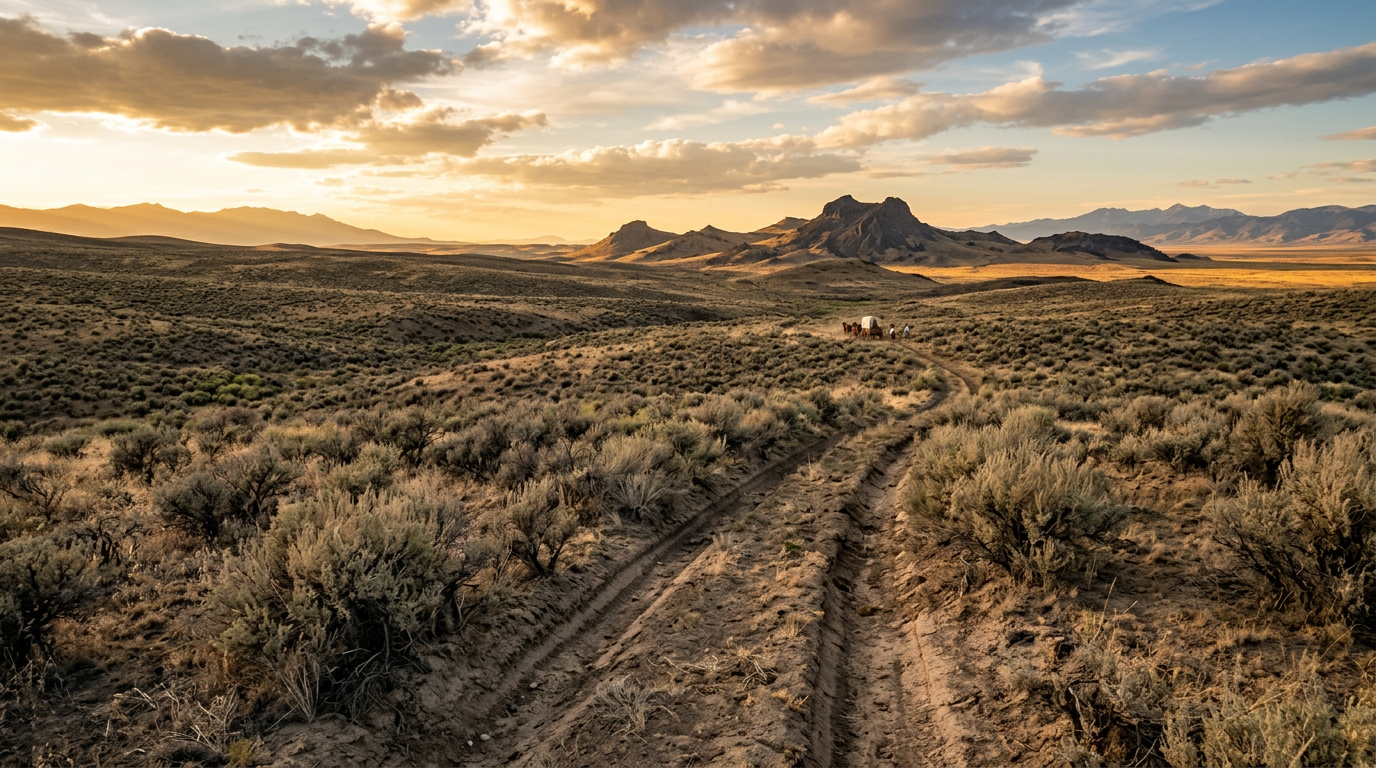
The Twin Falls County Historical Society maintains information on Trail sites in the county. Some wagon ruts are still visible in the sagebrush on the south side of the canyon, preserved by the dry desert climate that has kept them from eroding for nearly two centuries.
Rock Creek Station
Rock Creek, near Hansen in Twin Falls County, was a significant Oregon Trail waystation — a point where emigrants could resupply, rest, and prepare for the difficult crossing ahead. The site is partially preserved and interpretive signs explain what happened here.
City of Rocks — The Register of the Desert
In Cassia County, City of Rocks National Reserve preserves what emigrants called the "Register of the Desert" — granite formations where travelers inscribed their names, dates, and messages in axle grease as they passed through.
The oldest inscriptions date to the 1840s. Walking among these rocks and reading the names of people who passed through 175 years ago — on foot, with everything they owned in a wagon, heading toward an uncertain future — is one of the most unexpectedly moving experiences in Southern Idaho.
Hagerman and the Snake River Plain
The Oregon Trail followed the north bank of the Snake River through what is now Gooding County — the same Hagerman Valley where Thousand Springs flows today. Emigrants wrote about the springs in their journals, noting the extraordinary sight of water pouring from canyon walls in the middle of the desert.
The Hagerman Fossil Beds National Monument visitor center has exhibits on the Oregon Trail as it passed through this section, including journal excerpts from travelers who described exactly what you can still see from the river today.
Why This History Matters to Real Estate
People have been choosing to live in this landscape for a very long time. The Oregon Trail emigrants who stopped here and decided not to continue west — who built the communities that became Magic Valley — saw something in this place that was worth staying for.
I think about that when clients ask me why anyone would choose Twin Falls over Boise or Portland or Denver. The answer has been the same for 180 years: the river, the canyon, the land, the community.
Some things don't change.
Dr. Ron Jones | Rim & River Real Estate | rimandriver.com | 208-712-8386