self-sufficiency
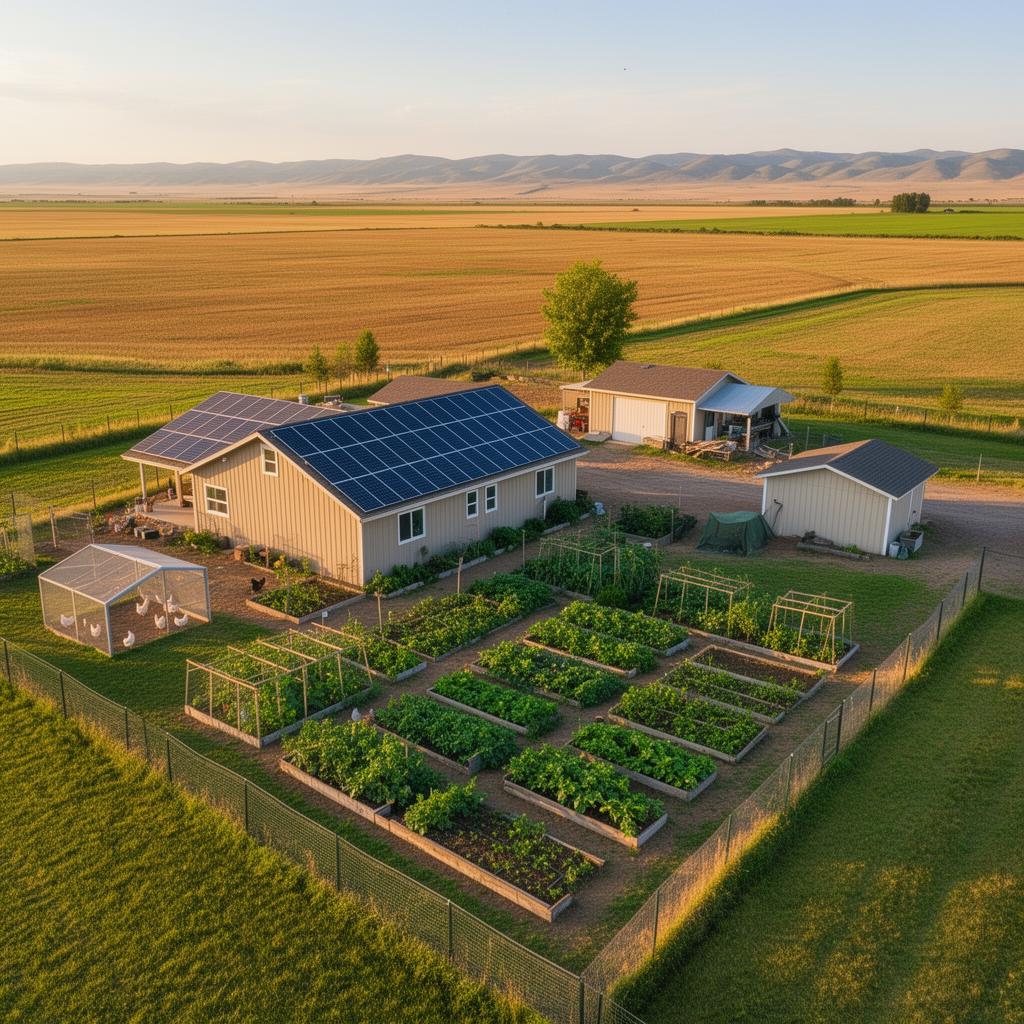
Self-Sufficiency in Southern Idaho: Why More Families Are Choosing the Homestead Life
Self-Sufficiency in Southern Idaho: Why More Families Are Choosing the Homestead Life
Something is happening out here in Magic Valley.
I see it in my real estate business. I hear it in conversations with clients. I lived it myself when my family packed up and moved to three acres in Southern Idaho.
Families are choosing to opt out of the full-speed-ahead, two-income-barely-keeps-up, no-time-to-breathe lifestyle that has become the default in most American metros. They are looking for something more deliberate. And a surprising number of them are finding it here.
Here is what the self-sufficient Southern Idaho life actually looks like — from someone who has lived it.
It Starts With a Decision
Every family I have worked with who has made this move started with a moment of clarity — a day when the math didn't add up anymore, when the commute felt like theft, when the cost of the lifestyle no longer justified itself.
For my family, it was the realization that we were working primarily to pay for the privilege of living somewhere expensive. That the things we actually valued — space, time together, food we could trust, kids who knew how to do real things — were all more available somewhere simpler.
Southern Idaho was the first place where the land was affordable, the community was real, the outdoor access was extraordinary, and the self-sufficient lifestyle was genuinely supported by the culture around it.
Here's what I mean by "supported by the culture:" when you move to Magic Valley and want to raise chickens, your neighbors know how to raise chickens. When you want to put in an irrigation system, someone nearby has done it and will tell you what they learned. This is an agricultural community at its core. The knowledge base is here.
What Self-Sufficiency Looks Like in Practice
I want to be honest: full self-sufficiency is a spectrum, not a destination.
No family I know — including mine — is completely off the grid and entirely independent. What is achievable, and what changes everything, is partial self-sufficiency.
A garden that produces a meaningful percentage of your vegetables. A flock of chickens that covers your egg needs. A chest freezer with a pig or a steer from a local farm. A pantry stocked with preserved food from your own harvest.
Here's what that does to your relationship with money: it lowers the floor. The baseline cost of feeding your family drops. The anxiety of being completely dependent on grocery store supply chains eases.
For a lot of families, that is the actual goal. Not total independence — just more independence. More resilience. More margin.
Southern Idaho makes that achievable at a price point that most Western states cannot match.
Finding Your Property
The first step is finding land that supports the life you're building. Not every acreage property in Magic Valley is set up equally — water rights, soil quality, zoning, existing infrastructure all matter enormously.
I have helped families find their Southern Idaho homestead properties, and I bring the lived experience of someone who has actually built what they were looking for. I know what questions to ask, what red flags to look for, and which areas of Magic Valley give you the best combination of affordability, access, and agricultural capability.
If this is the life you're building toward — let's talk.
Dr. Ron Jones | Rim & River Real Estate | rimandriver.com | 208-712-8386