winter
Southern Idaho Winters: What Nobody Tells You (And Why We Stayed Anyway)
Southern Idaho Winters: What Nobody Tells You (And Why We Stayed Anyway)
I am going to be straight with you about Magic Valley winters.
They are real. Not a decoration. Not a light dusting that melts by noon. Real winter — with hard freezes, occasional heavy snow, and wind that will locate every gap in your insulation and make its presence known.
I say this not to discourage you, but because honest information leads to better decisions. The people who love Southern Idaho winters — who genuinely look forward to them — are people who came in with accurate expectations.
Here is what winter is actually like in Magic Valley, from someone who has lived it on an acreage property.
The Temperature Reality
Twin Falls sits at about 3,700 feet elevation on the Snake River Plain. Average January lows are in the upper teens to low 20s Fahrenheit. Hard cold snaps can push temperatures to single digits or below zero for short periods.
This is cold enough to require serious preparation for livestock and gardens. Water lines freeze. Chicken waterers freeze. The garden is done — anything you didn't harvest before the first hard frost is lost.
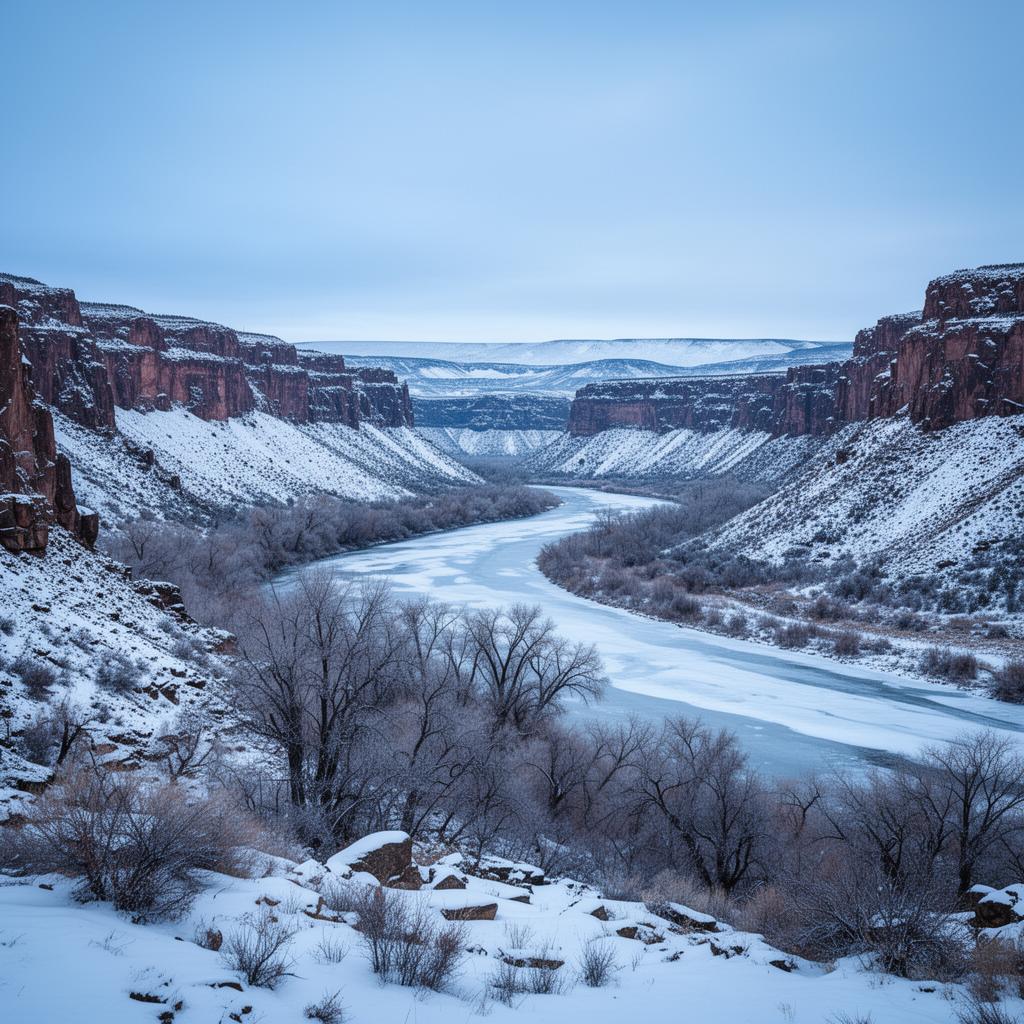
But — and this is important — it is not the relentless gray cold of the Pacific Northwest. Southern Idaho averages over 200 days of sunshine per year, including in winter. A cold, clear, sunny January day in the Snake River Canyon is genuinely beautiful. Brutal at 7 AM when you're breaking ice out of the horse trough. Beautiful by 10 AM when the sun hits the canyon walls.
The Snow Situation
Magic Valley gets modest snowfall by Mountain West standards — typically 15 to 25 inches per year in Twin Falls. It snows, it sticks for a few days, and it often melts before the next system arrives.
This is not Colorado. You are not managing four feet of snow on a regular basis. A good snow blower or a 4WD truck handles most situations.
The exception: wind. Southern Idaho wind combined with even modest snowfall creates blowing and drifting conditions that can make roads impassable when total accumulation is modest. A rural property means you maintain your own driveway. Budget for that.
Winter on the Homestead
Winter on our three-acre property was the hardest season and also, strangely, one of the best.
Animal care gets harder — more time, colder conditions, more vigilance about water and shelter. But the pace of the homestead slows significantly. The garden is resting. The big projects are done. There is time to plan, to read, to be inside with the family.
Here's what winter does on a homestead: it resets you. The relentless productivity of spring, summer, and fall gives way to a season of maintenance and rest. You appreciate the slowdown.
And when the first warm day of February arrives — when the hens start laying again and the soil starts to thaw — there is a joy in that you cannot manufacture. It has to be earned.
The Snake River Canyon in Winter
Winter is one of the most beautiful and least-visited seasons in the Snake River Canyon.
The crowds are gone entirely. The canyon walls are bare, revealing the geological architecture that vegetation hides in summer. On clear cold days, the Snake River runs dark and still under a pale winter sky, and the silence in the canyon is absolute.
I have hiked the rim trail in January and seen exactly two other people. I have kayaked the calm sections in November in a drysuit and had the canyon to myself for an entire morning.
If you want to see the canyon in its most honest, stripped-down form — come in winter.
Why We Stayed
The question I always get: "But what about the winters?"
My answer: the winters are part of why we stayed. Not despite them — because of them.
A place with real seasons is a place where the good seasons feel earned. The October canyon colors hit harder because you know what's coming. The first kayak float of April feels like a gift because you waited for it.
Southern Idaho's winters are part of what makes this place feel real. And real is what we came here for.
Dr. Ron Jones | Rim & River Real Estate | rimandriver.com | 208-712-8386