birding
Wild Birds of the Snake River Canyon: A Magic Valley Birding Guide
Wild Birds of the Snake River Canyon: A Magic Valley Birding Guide
I am not a birder in the formal sense — I don't keep a life list, I don't own a spotting scope, and I cannot always identify what I am looking at by its call alone.
But I spend a lot of time on the Snake River Canyon, and I pay attention. And what I have seen from my kayak over the years would surprise most people who think of Southern Idaho as a landscape that is too dry and spare to support much wildlife.
Here is what is actually living in and around the canyon — if you know where and when to look.
Raptors: The Canyon's Permanent Residents
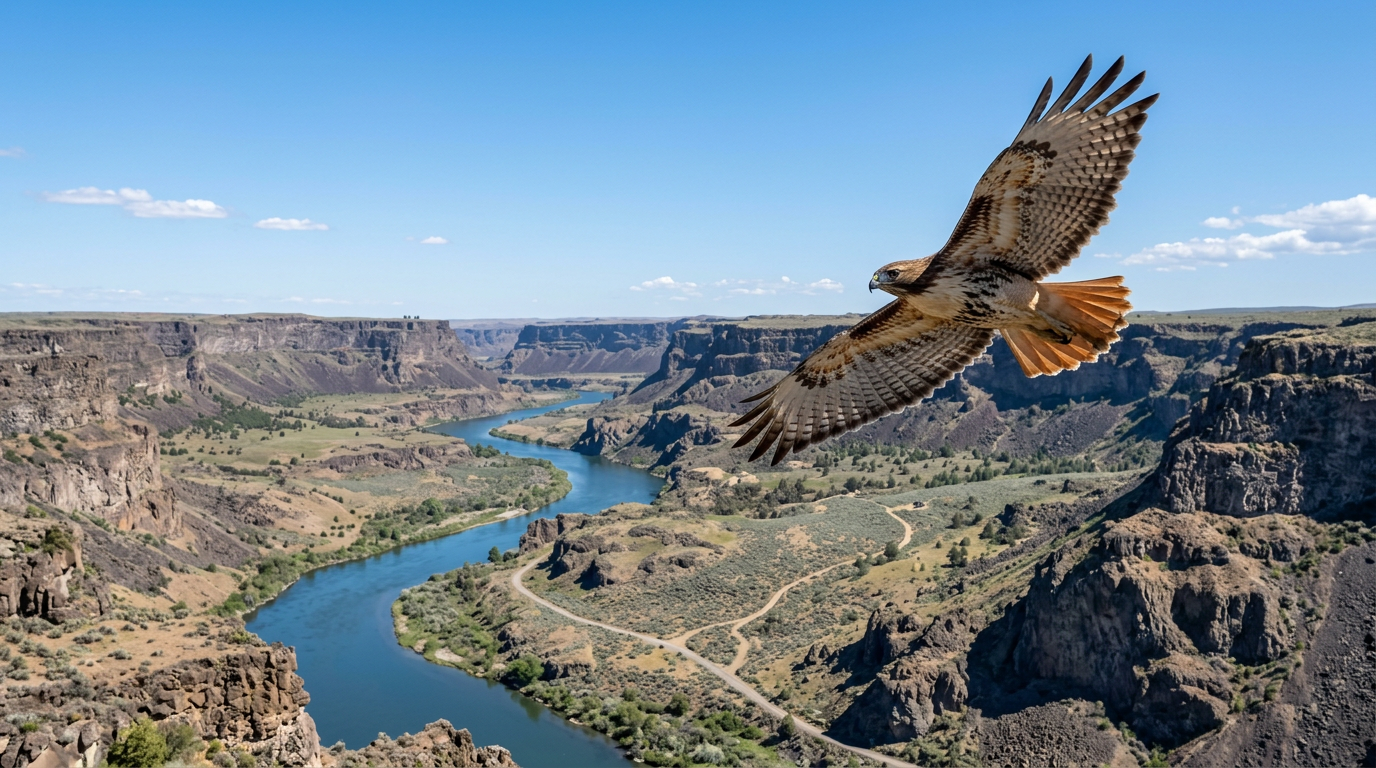
The Snake River Canyon is exceptional raptor habitat. The combination of tall basalt cliffs (ideal nesting sites), an open hunting corridor, consistent updrafts, and abundant prey makes the canyon one of the most reliable places to see multiple raptor species in a single outing.
Prairie Falcons nest in the canyon walls and are present year-round. Fast, aggressive, and dramatic in flight — if you see a falcon hunting along the canyon wall at speed, it is almost certainly a prairie falcon.
Red-tailed Hawks are the most commonly seen raptor from the rim trail. They use the canyon updrafts for effortless soaring and hunt the rim vegetation.
Golden Eagles are present but less common — look for them in the less-visited eastern sections of the canyon. Wingspan up to 7.5 feet. Unmistakable.
Osprey appear along the river wherever fish are present. Their hunting behavior — hovering, then plunge-diving feet-first — is one of the great wildlife spectacles available from a kayak.
Waterfowl: Seasonal and Year-Round
Canada Geese are year-round residents of the Snake River through Magic Valley and are abundant enough to be almost furniture. Do not let their ubiquity make you overlook them — a pair of Canada Geese on calm water with canyon walls reflected around them is still a beautiful sight.
White Pelicans are summer visitors that appear on the larger water bodies — Lake Walcott in Minidoka County, the Hagerman Valley in Gooding County. Seeing 30 white pelicans soaring in formation above a canyon is one of those moments that makes you stop paddling entirely.
Mergansers — both Common and Hooded — appear on the river in winter and spring, diving for fish in the canyon sections. The male Hooded Merganser with its crest raised is one of the most striking small ducks in North America.
Herons and Egrets
Great Blue Herons are the canyon's most iconic wading bird — tall, prehistoric-looking, absolutely still in the shallows until the moment they strike. I see them on almost every float, usually standing motionless at the water's edge in the shadow of the canyon wall.
From a kayak, you can sometimes get quite close before they flush — their takeoff, with that enormous wingspan unfolding, is startling every time even when you expect it.
The Unexpected: Canyon Wrens
If you paddle close to the canyon wall and stop making noise, you may hear a sound that doesn't fit — a cascading trill, descending in pitch, bouncing off the basalt around you.
That is the Canyon Wren — a tiny brown bird that lives in the rock faces of the canyon and produces one of the most beautiful bird songs in North America. Disproportionate to its size. Worth stopping everything to listen to.
Birding and Real Estate
I have shown properties to buyers who are specifically seeking wildlife access — river views, canyon proximity, habitat diversity. If birding is part of your lifestyle and you want to know which neighborhoods and properties put you closest to the best habitat in Magic Valley, I can help with that.
Dr. Ron Jones | Rim & River Real Estate | rimandriver.com | 208-712-8386